- 1. A Lean That Wasn’t There Before
- 2. Large Dead Branches High in the Canopy
- 3. Fungal Growth at the Base or on the Trunk
- 4. Deep Cracks or a Hollow Sound When You Tap the Trunk
- 5. A Thinning or Undersized Canopy Compared to Past Years
- 6. Damage at the Root Zone
- 7. Storm Damage That Looks Minor but Isn’t
- What to Do If You’re Seeing One or More of These Signs
Most trees don’t fail without warning. They tell you first, usually weeks or months in advance, but the signs are easy to miss if you’re not looking for them. A tree can look perfectly green and healthy from your kitchen window and still be carrying a serious structural problem you’d only catch by walking over and looking closely.
Here are seven signs worth paying attention to, and what each one actually tells you.
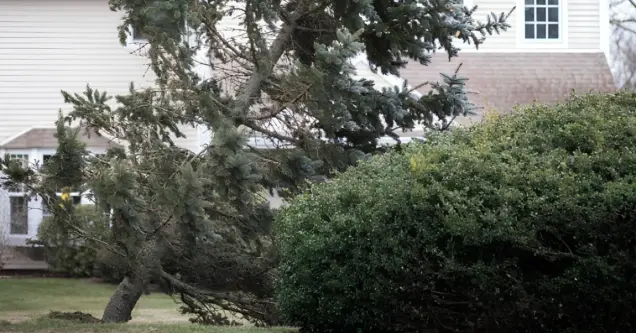
1. A Lean That Wasn’t There Before
Every tree has some natural lean, and that alone isn’t a problem. What matters is a lean that’s new, one that developed over days or weeks rather than one the tree has had its whole life. A sudden lean almost always means something is happening at the root level, not just in the trunk or canopy.
Check the ground on the opposite side of the lean. Cracked or heaving soil, or roots that look like they’re starting to lift out of the ground, confirm that the root system is actively losing its grip. This is one of the more urgent signs on this list, since a tree with a failing root system can come down with very little additional push, sometimes with no storm involved at all.
2. Large Dead Branches High in the Canopy
A few small dead twigs scattered through a tree are completely normal. Large dead branches sitting in the upper canopy are a different situation. Climbers have a name for these: widow-makers, meaning dead or partially broken limbs that are still hanging in place and can come down without warning.
These are dangerous specifically because they’re hard to spot from the ground and because they fall from real height, which means real force by the time they hit whatever is underneath. If you can see dead wood in the upper third of a tree’s canopy, that’s worth having removed before the next windstorm makes the decision for you.
3. Fungal Growth at the Base or on the Trunk
Mushrooms growing directly out of the trunk, shelf-like fungal growth at the base, or clusters of mushrooms in the soil right around the root flare are all signs that a wood-decay fungus has established itself inside the tree. What you’re seeing on the outside is just the fruiting body. The organism doing the actual damage is inside the wood, and it’s been there far longer than the mushroom has been visible.
By the time fungal growth shows up on the outside, the decay process has typically been underway for years. A tree can look structurally sound from a distance and be significantly hollowed out internally. This is one of the signs where a visual check alone isn’t enough, and it’s worth having a professional sound the trunk or take a closer look.
4. Deep Cracks or a Hollow Sound When You Tap the Trunk
This one requires actually walking up to the tree. Surface cracks in the bark are normal and not a concern on their own. A crack that runs deep enough to slide a finger into, especially one running vertically along a large section of trunk, is a different matter, particularly if there’s staining or moisture around it.
You can also get a rough read on internal condition by tapping the trunk firmly with the back of a hatchet or a solid stick at a few points around the base. A healthy hardwood gives back a dense, solid sound. A trunk with significant internal decay sounds noticeably hollow by comparison. Neither test is definitive by itself, but together with other signs on this list, they’re worth taking seriously.
5. A Thinning or Undersized Canopy Compared to Past Years
If you’ve lived with the same trees for a few years, you probably have a rough sense of what a normal, healthy canopy looks like on each one. A canopy that’s noticeably thinner than it used to be, or leaves that are smaller than they’ve been in past seasons, often signals a stressed root system, disease, or a tree that’s simply declining.
This sign is easy to dismiss because it develops slowly, over one or two full growing seasons rather than overnight. It’s worth comparing photos from a year or two ago if you have them, since gradual decline is much harder to notice in the moment than it is in hindsight.
6. Damage at the Root Zone
Most people never think to check the ground around the base of a tree, which is exactly why this sign gets missed so often. A few things worth looking for: soil that’s mounded or cracked in a ring pattern around the trunk, which can mean the root plate is beginning to lift before any lean is visible above ground; old wounds at the base from a vehicle strike, lawn equipment, or construction activity that happened years earlier; and any recent digging, grading, or trenching near a mature tree, since cut or damaged roots can take a full season or more to show up as canopy decline.
If you bought a property with mature trees already on it, root zone damage from before your ownership is a real possibility, and it’s one you wouldn’t necessarily know to look for.
7. Storm Damage That Looks Minor but Isn’t
A tree that comes through a storm still standing, with its canopy mostly intact, can look like it dodged the worst of it. But wind and ice stress a tree’s internal structure in ways that don’t always show up immediately. A tree that seemed fine right after a storm can show root or trunk damage a full growing season later, once the stress has had time to manifest.
If a tree on your property went through a significant storm, particularly the kind of straight-line wind event this region gets fairly often (you can check past severe weather activity through the National Weather Service for the DC and Baltimore region, which covers Fredericksburg), it’s worth a follow-up look the following spring even if nothing seemed wrong right after the storm passed.
What to Do If You’re Seeing One or More of These Signs
One sign on its own sometimes just means monitoring the tree over time rather than acting immediately. Two or three signs on the same tree, especially one close to your house, your driveway, or anywhere people spend time, is a different situation and worth a professional look sooner rather than later.
The good news is that not every warning sign ends in removal. A tree with fixable deadwood, or one that just needs a season of monitoring, doesn’t need to come down, and an honest evaluation should tell you which situation you’re actually in rather than defaulting to the most expensive answer.
If you’re looking at a tree on your property and any of these signs sound familiar, a free evaluation costs nothing and gives you a straight answer.
Call (540) 766-5558 for a free tree evaluation across Fredericksburg, Spotsylvania, and Stafford County.